

- Updated: August 30, 2026
You gave everything.
Your time. Your attention. Your emotional bandwidth.
You were the go-to. The steady one. The one who always knew what to say.
And then it hit you—inside and outside the office, you’d been overfunctioning for far too long.
Now you’re bitter.
Not petty. Not dramatic. Just… exhausted.
Because once you stopped carrying everyone, they didn’t thank you. They panicked.
Not because they saw your pain—but because they lost their emotional blanket.
This is the resentment that comes after overgiving.
And if you don’t name it, it will harden you.
You don’t want to go scorched earth. You want to get better—not bitter.
But you need to understand what really happened first.
Not for their sake.
For your sanity.
What This Recovery Journey Covers
How You Got Here Without Realizing It
I know how I got here.
Maybe you do too.
But let’s be honest—it’s painful to talk about.
So let’s unpack it gently. No condescension. No shame.
Before we explain the how, we need to name the why.
Because for many of us, we learned to rationalize like champs.
We became masters at making sense out of nonsense.
As kids, we had to.
Why was dad passed out drunk at 2 p.m. on a Saturday?
You told yourself, “He just had a hard workweek.”
You swallowed the lie because admitting the truth would’ve broken you.

And when you spend 18+ years in a home where people routinely lie to themselves and each other to avoid hard truths, that becomes your normal.
So to function in a gaslit environment, you adapt.
You become the savior. The scapegoat. The hero. The mascot.
You perform emotional labor no one sees—and no one thanks you for.
Most of the high-functioning, hurting leaders I work with?
They were the long-suffering scaffolding for people who could not or would not hold up their own emotional load.
We were the ones covering for Jimmy or Amy sneaking out,
Explaining away Mom’s coldness,
Spackling over the cracks with silence and fake smiles.
And you get good at what you practice.
So why wouldn’t that same pattern show up later?
In your workplace.
In your marriage.
In your leadership.
Eventually, the fallout hits.
You don’t stop because you had a revelation.
You stop because the cost became too damn high.
Your credit card bill tells a story of numbing.
Your body’s fried.
You’re workaholic, perfectionistic, or compulsively trying to “smooth over” things that should’ve been shut down long ago.
And then it all crashes.
You’re left holding the receipts—mental, emotional, financial.
You’re not just exhausted.
You’re angry.
And beneath that anger?
A grief so deep it aches in your bones.
Grief for the years—maybe decades—you gave away trying to be who everyone needed…
and never once being who you needed.
Why They Didn’t See What It Was Costing You
They may not have hated you.
They may not have consciously decided to use you.
But they learned to relate to the role you played.
When someone is dysregulated, avoidant, or internally chaotic, they often stop seeing the whole person in front of them.
They see function.
Relief.
Stability.
A buffer to absorb what they do not know how—or do not want—to carry.
And you became that buffer.

You were strong.
Capable.
Available.
Because your overfunctioning blended so easily into their underfunctioning, the system kept running.
Your reliability became invisible—like electricity.
Expected while it worked.
Only noticed when it stopped.
That does not necessarily mean they never cared about you.
It means the relationship may have become organized around what you provided.
They appreciated the steadiness.
The access.
The emotional labor.
The way you made life easier.
But appreciating what someone provides is not the same as understanding what it costs them to provide it.
Somewhere along the way, you may have started feeling responsible for everyone else’s emotional experience—confusing their comfort with your responsibility.
Your emotional labor subsidized their stability.
And unless both people were willing to examine the arrangement, no one had much incentive to change it.
The other person received support.
You received a role.
And roles can feel like love for a very long time.
When Bitterness Stops Feeling Like Bitterness
One of the more dangerous stages of bitterness is when you no longer experience yourself as bitter.
At first, resentment is often obvious.
You know you are angry.
You know you feel used.
You replay what happened.
You think about what someone should have done differently.
But resentment can change when it stays around long enough.
Instead of remaining something you feel, it can become part of how you interpret people.
That is what I mean when I say bitterness becomes metabolized.
I am not using that as a clinical term. I mean the bitterness has been absorbed so thoroughly into your way of seeing the world that you no longer recognize it as bitterness.
Now it sounds like:
I’m just being realistic.
I know how people are.
I’m not mean. I’m telling the truth.
Some people really are incompetent.
I have every right to feel this way after everything I have done.
And sometimes there is plenty of truth mixed into those statements.
That is precisely what makes this difficult to see.
Anger and contempt are not the same thing
Research on emotion makes an important distinction between anger and contempt.
Anger is often directed toward something another person did. There can still be an implicit belief that the behavior should change.
Contempt goes further. It involves a negative judgment about the person themselves and frequently carries an element of status or superiority: You are beneath me. You are foolish. You are not worth taking seriously.
Researchers studying anger and contempt have described contempt as involving devaluation and rejection of another person, rather than merely opposition to what that person has done.
That distinction matters.
Because there is a large psychological difference between:
“I am angry about how you treated me.”
and
“You are the kind of person who deserves my disgust.”
I can see this more clearly now because I have lived on both sides of it.
I can look back at some things I wrote years ago and see contempt that I could not recognize at the time.
I thought I was being bold.
Truthful.
“Based,” as people like to say.
Sometimes I was telling the truth.
But truth was mixed with something else: the satisfaction of standing above the people I was criticizing.
That is the problem with contempt.
It can borrow the language of discernment.
Superiority can protect you from something harder
Contempt can also become psychologically useful.
If I can decide that you are stupid, lazy, weak, entitled, hopeless, or beneath me, I do not have to spend very much time examining what your behavior brings up in me.
I do not have to feel disappointed.
Or powerless.
Or ashamed that I tolerated something for too long.
I do not have to examine the choices I made that helped create the situation.
And I certainly do not have to face the possibility that I cannot fix you.
Research on contempt frequently connects it with judgments of hierarchy and moral superiority. Rather than simply communicating you did something wrong, contempt communicates something closer to there is something wrong with you.
That emotional position can feel powerful when the alternative feels unbearable.
I saw versions of this with former clients.
Some people were profoundly unhappy with their lives.
They were frustrated with decisions they had made, relationships they maintained, opportunities they avoided, or circumstances they felt trapped inside.
But examining those things directly felt threatening.
So the frustration had to go somewhere.
Sometimes I became the convenient location.
The coach becomes unreasonable.
The spouse becomes incompetent.
The employees become lazy.
The children become ungrateful.
Everybody else becomes the problem.
And once that story becomes established, contempt can feel like evidence that you are the only sane person in the room.
The problem is not whether your criticism is true
This is where people can misunderstand discussions about bitterness.
Healing does not require pretending everyone is wonderful.
Some people really are irresponsible.
Some people exploit generous people.
Some clients blame everyone except themselves.
Some leaders are incompetent.
Some relationships really do need to end.
The question is not:
“Am I allowed to see what is wrong?”
The better question is:
“What is happening inside me while I see it?”
Can you recognize someone’s limitations without needing to diminish their humanity?
Can you leave without needing them to become pathetic in your mind?
Can you acknowledge that someone harmed you without building your identity around being morally superior to them?
Can you admit where another person failed while still examining your own choices?
Those are very different forms of clarity.
And this may be one of the clearest signs that bitterness has become deeply embedded:
You no longer experience your contempt as an emotion. You experience it as reality.
You are no longer thinking, I resent this person.
You are thinking, This is simply who they are.
That is why bitterness can survive long after the original anger feels gone.
The anger may have quieted.
But the judgment remained.
And healing eventually asks you to examine that too.
You Begin Confusing Being Needed With Being Powerful
It doesn’t matter whether the relationship involves a client, family member, friend, business partner, or employee.
The roles may change.
The pattern rarely does.
One person overfunctions.
The other slowly learns to depend on it.
Together, they create a system that works—until the person carrying most of the emotional weight can no longer keep it running.
That is exactly what happened in a friendship I discussed with someone I’ll call Hank.
He had recently ended a 15-year friendship with someone he now realized had never really functioned as a mutual friend.
Tommy was more like an emotional dependent.
Hank told me:
“It’s weird—I don’t even know why I’m upset. My business is thriving. My partner and I are good. I’ve got no real problems. But Tommy found a new woman, and now I’m out of his world. And I’m fcking mad. And I don’t know why.”
I asked him, “What was your friendship like?”
He shrugged.
“Typical guy stuff. He’d call me when something went wrong. I’d help. Gave him a place to crash when he broke up with his ex. Spotted him cash a few times—he mostly paid me back. It was just nice to have someone to fish with on the weekends.”
But as Hank kept talking, the pattern became clearer.
Tommy was present.
But he was never emotionally available.
He leaned.
He received.
He took.
And when someone new came along, Tommy moved on without gratitude, grief, or much acknowledgment of what Hank had carried for years.
Fifteen years of proximity.
Fifteen years of micro-rescues.
And suddenly, Hank felt disposable.

What hurt wasn’t only losing Tommy.
It was realizing that much of the relationship had been organized around Hank’s usefulness.
That is one of the hidden dangers of overhelping.
You can begin confusing being needed with being powerful.
You tell yourself your consistency will change them.
Your loyalty will stabilize them.
Your patience will eventually teach them how to show up differently.
But their dependence is not evidence of your power.
And it is not necessarily evidence of love.
Sometimes it only means the relationship has learned to function around your willingness to carry what the other person avoids.
You are not transforming them.
You are making it easier for them not to transform.
And while you are busy keeping them afloat, you are slowly abandoning yourself.
That is how helping becomes a trap.
Not because generosity is wrong.
Because your usefulness begins standing in for mutuality, honesty, and love.
Healing Without Abandoning Yourself
Bitterness may be a natural stop on the road.
But it is not the destination.
You can name what happened.
Feel the anger.
Grieve the years.
And still choose a kind of healing that does not harden you.
That begins with telling yourself the truth.
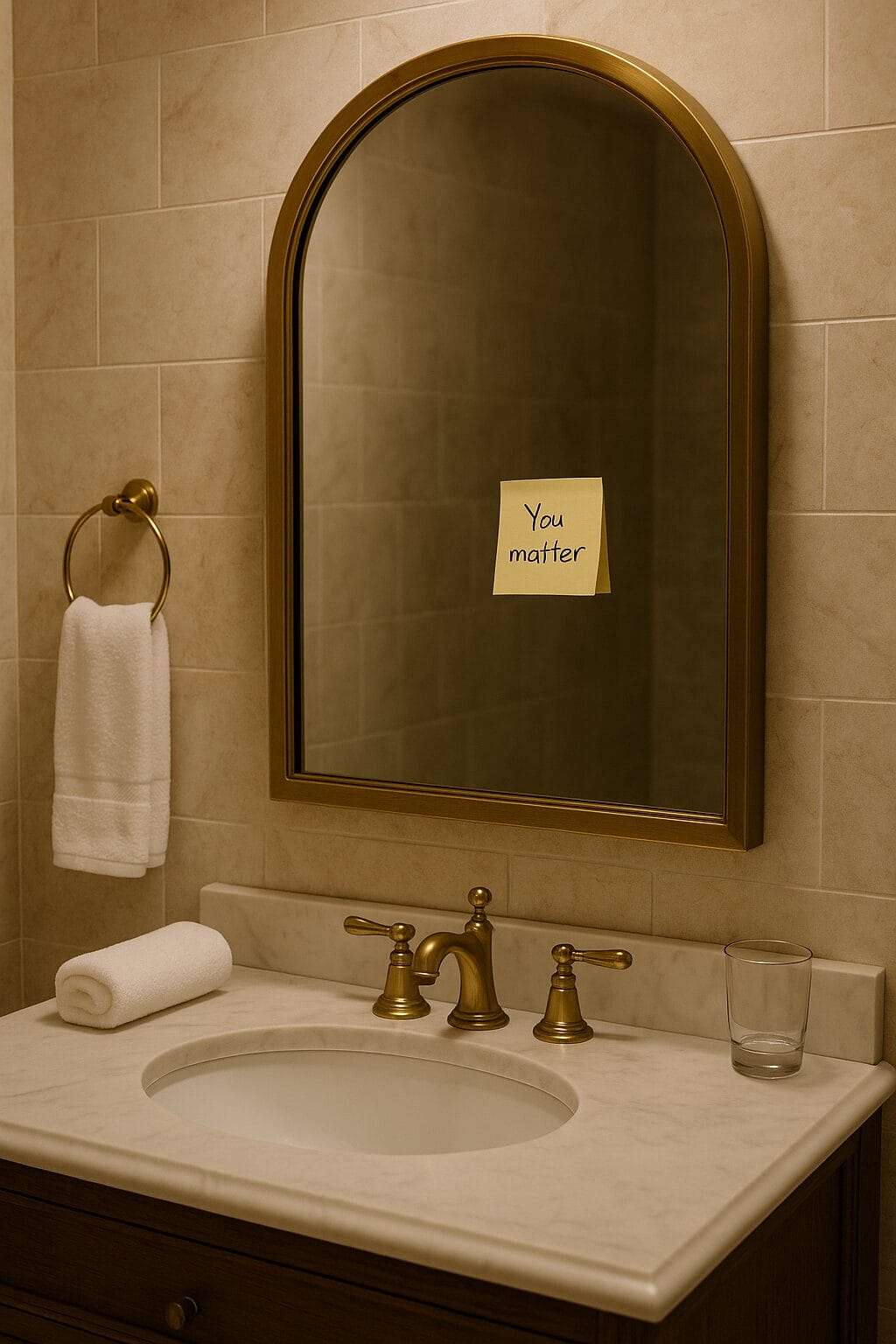
You do not have to sanitize the relationship to prove you are compassionate.
You may have been used.
Misread.
Overrelied on.
You may have given more than the relationship was ever prepared to return.
Calling it “a misunderstanding” when it was a pattern does not create peace.
It keeps you confused.
Clarity is what begins the healing.
But clarity is not the same as building your life around anger.
Anger can show you what mattered.
What was violated.
Where you abandoned yourself to keep someone else comfortable.
Let it speak.
Let it teach you.
But do not build your house there.
Because healing is not becoming suspicious of everyone who needs support.
It is learning to help from choice instead of compulsion.
Healthy helping begins with one uncomfortable question:
Am I supporting this person—or preventing them from carrying what belongs to them?
Sometimes support looks like listening.
Sometimes it means sharing a resource.
Sometimes it means giving someone time to regain their footing.
And sometimes it means doing nothing.
Not because you do not care.
Because stepping in would only keep the old pattern alive.
Healthy helping does not require unlimited access.
It does not make you responsible for another adult’s emotions, consequences, or growth.
At work, it means setting clear expectations, offering reasonable support, and allowing consequences when someone repeatedly refuses ownership.
At home, it means loving people without becoming responsible for every crisis, mood, or disappointment.
In friendship, it means expecting mutuality instead of accepting a permanent role as unpaid therapist, emergency contact, or emotional storage unit.
And within yourself, it means treating your needs as responsibilities—not inconveniences.
You begin checking your capacity before saying yes.
You stop explaining every boundary as though it requires a legal defense.
You let other adults feel disappointed.
You allow silence to remain silence.
You stop rushing in simply because someone else is uncomfortable.
That does not make you selfish.
It makes your care cleaner.
You can still be generous.
Still compassionate.
Still available.
But your help no longer requires you to disappear.
That is the difference between caring and carrying.
Caring says:
“I’m here with you.”
Carrying says:
“I will take this from you, even if it costs me.”
One creates connection.
The other creates dependence.
Healing means seeking relationships that honor your humanity—not merely your utility.
It means no longer proving your worth through usefulness.
It means allowing your kindness to have limits.
And it means learning the difference before bitterness has to teach you again.
FAQ: What If I Just Want to Burn It All Down?

“I want to disappear. They didn’t care when I was around—why stay?”
You’re not invisible. You were used, relied on, over-relied on.
But that doesn’t mean you didn’t matter. It means you were in a system that never learned to reciprocate.
Disappearing might feel like relief, but what you really need is to be seen clearly—first by yourself.
👉 Stop Rationalizing Behavior: The Silent Habit That Kills Self-Trust and Courage
👉 You’re Not Broken—You’re High-Functioning and Hurt
“I’m so angry I want to destroy every relationship—even the good ones.”
That’s not destruction talking. That’s grief in armor.
The instinct to scorch the earth is your nervous system saying, “I don’t trust anyone anymore.”
Pause. Not everyone failed you. But those who did? That rupture deserves reflection, not self-destruction.
👉 Loyalty Trauma Bonds: When Staying Committed Becomes Self-Betrayal
"How do I know I’m healing and not just avoiding people?"
Healing makes you softer, wiser, and more boundaried—not just “cut off.” Avoidance feels hollow. Healing feels rooted. Pay attention to your emotional posture, not just your social calendar.
👉 Stop Fighting Ghosts: How to Recognize and Interrupt Cognitive Distortions
“What if I want to hurt myself just to make the pain stop?”
If you’re in that place, stop reading this post and please reach out to someone who can hold you now.
The world doesn’t need your utility. It needs your presence.
Not because of what you do. Because of who you are.
You don’t need to bleed to be heard. You need to be held. Please don’t wait.
Your life is sacred—even when it feels unbearable.
👉 When Survival Masquerades as Love: The Hidden Truth About Trauma Bonds
You Were Never Meant to Earn Love Through Exhaustion
For a long time, helping may have been how you stayed connected.
How you avoided conflict.
How you proved your worth.
How you made yourself difficult to abandon.
You became useful before you learned how to simply be known.
And people adjusted.
They called you dependable.
Strong.
Generous.
The one who always showed up.
But being valued for what you carry is not the same as being loved for who you are.
That is the grief underneath the bitterness.
Not only that people took too much.
But that you kept giving, hoping your devotion would eventually create the safety, loyalty, or mutuality you needed.
Sometimes it did not.
Healing begins when you stop trying to make the old arrangement fair.
You stop waiting for everyone to understand what it cost you.
You stop needing them to admit how much you carried before you give yourself permission to put it down.
Your life does not have to remain organized around other people’s emergencies.
Your relationships do not have to depend on your exhaustion.
And your leadership does not have to be proven through self-abandonment.
You can be loving without being endlessly available.
You can be generous without becoming responsible for the outcome.
You can support people without making their lives your assignment.
Some people may not like the person you become when usefulness is no longer the price of admission.
Let them adjust.
The people capable of mutuality will not require you to disappear in order to stay connected.
And the people who only knew how to receive from you may finally reveal what the relationship was built upon.
Either way, you will know the truth.
You were never meant to earn love through exhaustion.
Ready to Understand the Pattern Beneath Your Overgiving?
If helping has become so automatic that you no longer know where generosity ends and self-abandonment begins, start with the Life Script Questionnaire.
It can help you identify the emotional lesson that taught you to become indispensable—and the survival pattern that keeps pulling you back into the same role.
When you are ready for deeper support, you can also explore working with me.
This work is not about becoming colder.
It is about becoming honest enough to care without disappearing.


